When the World Starts Looking Like Ezekiel 38 and 39
There are moments when the news stops feeling like news and starts feeling like a warning.

When the World Starts Looking Like Ezekiel 38 and 39
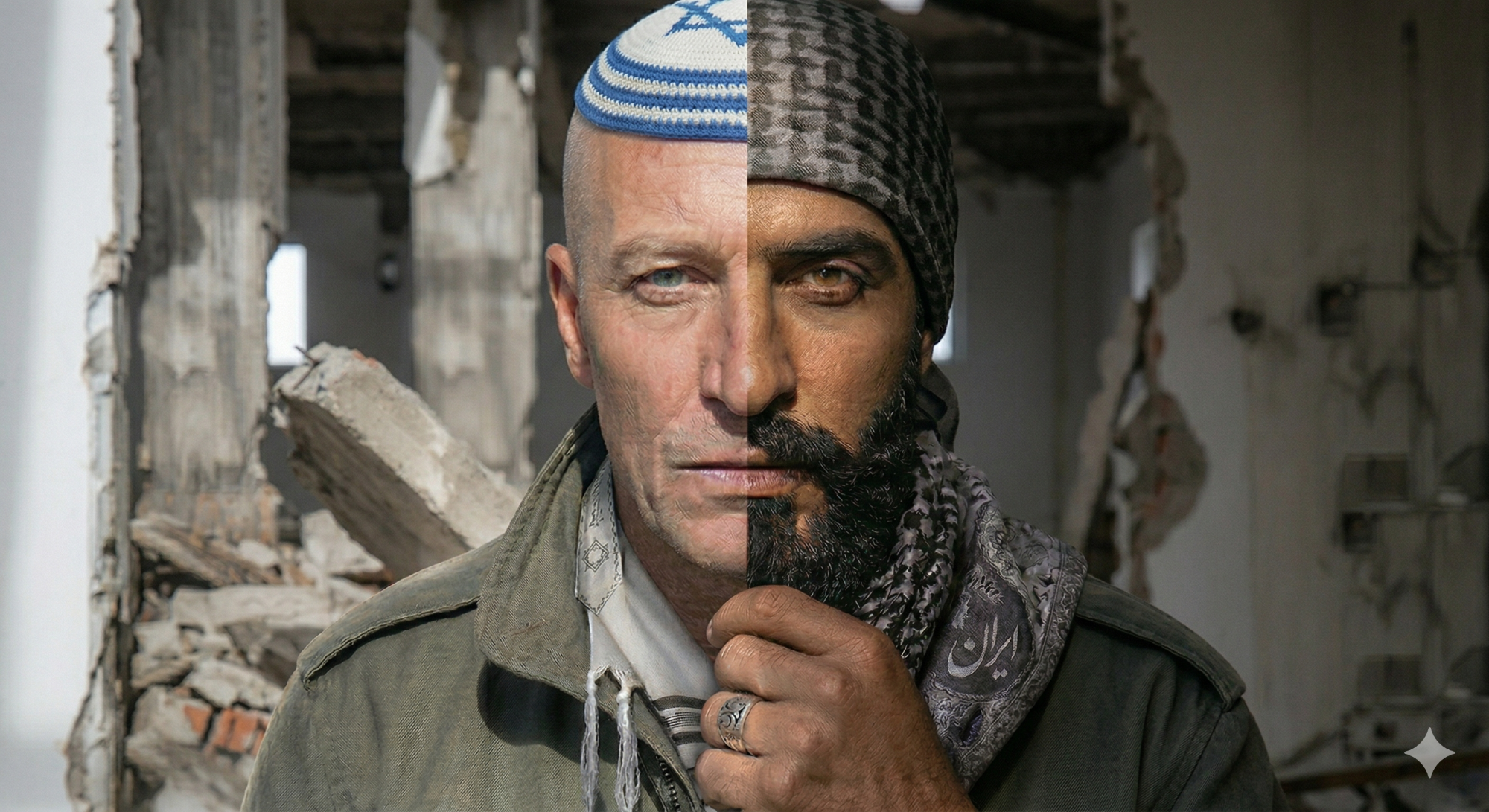
Israel is under pressure. Iran is making threats. The United States is being pulled deeper into a conflict it did not start and cannot easily finish. Alliances are shifting in ways that would have been unthinkable a generation ago. The whole region feels like a room filling with gas, and the world is holding a match. In moments like this, many believers stop watching the news and start reading the prophets. They turn to Ezekiel 38 and 39 and ask a question that will not go away. Is this it. Is the old prophecy of Gog and Magog beginning to move in real time before our eyes?
To answer that question honestly, we have to walk through the story the way Ezekiel tells it, follow it through to Revelation, and reckon with what the whole arc of scripture is actually saying about where history is going.
A Brief Summary of Ezekiel 38 and 39
Ezekiel 38 and 39 describe a final invasion against Israel led by Gog of the land of Magog. Israel has been regathered to the land after a long exile. The people are dwelling there, and while they live in what the text describes as a kind of unsuspecting security, Gog forms a coalition of nations and devises a plan to come against them. What begins as a military and geopolitical threat quickly becomes something larger. God declares that He will use this conflict to make His name known among the nations. As the invading armies move against Israel, God intervenes directly. Earthquake. Confusion. Plague. Fire. Destruction. The coalition collapses. Gog is defeated. The invaders are destroyed.
The aftermath is just as important as the battle itself. Israel spends months burying the dead and years burning the weapons of war. The point of the prophecy is not merely that Israel survives another assault. The point is that God reveals His holiness and sovereignty in judgment. The nations are forced to recognize who He is. Israel is reminded that its future does not rest on military power but on the Lord alone. Ezekiel 38 and 39 are about an end-time assault, divine intervention, overwhelming judgment, and the public vindication of God's name before a watching world.
Israel Is Back in the Land
The prophecy begins with a people who have been exiled by God and restored by God. That matters because the stage is already set before the battle ever begins. Israel is not a historical memory at this point in the prophecy. It is a living nation. A visible nation. A nation at the center of the world's attention. The land is no longer just scripture. It is headline news.
Israel Dwells in a Kind of Security
Ezekiel describes Israel as a people at rest, living without fully grasping the danger forming around them. This is where the present moment feels both close and different. Close, because Israel remains at the center of world tension. Different, because the current atmosphere is not calm. It is charged. It is already violent. But the biblical pattern reminds us that threats are often misunderstood until they have already grown beyond control. Vulnerability rarely announces itself clearly until it is too late.
Gog Forms a Coalition
Gog does not come alone. Gog gathers others. The threat becomes collective. The hostility becomes regional, then international. It is no longer one grievance, one border dispute, or one nation's fury. It becomes a network of aligned hostility aimed at the people of God. Anyone watching the current realignment among Iran, Russia, and their regional proxies instinctively understands what that kind of coalition looks like as it begins to take shape.
Gog Devises an Evil Plan
The attack does not come by accident. It is imagined first. It is desired first. Before armies move, the heart of aggression is already at work. War is always born twice, once in the mind and then in the field. That is one reason prophecy feels so unsettling when you read it against the backdrop of the present moment. It does not merely describe explosions. It describes intention. It exposes what is driving nations before the first shot is fired. And right now, the intention is not hidden. It is being declared openly, repeatedly, and without shame.
The Coalition Moves Against Israel
What was planned in secret becomes visible in public. What was brewing in speeches, strategies, and shifting alliances finally takes form. The shadow becomes real. The tension becomes action. The nations do not merely posture. They advance. This is the moment where many people look at the present confrontation between Israel, Iran, and the broader region and feel something more than political anxiety. They feel the weight of recognition.
God Declares His Purpose
This is what lifts the prophecy out of the realm of ordinary geopolitics. The battle is not only about armies, territory, or military advantage. God says the conflict will become the occasion for His own name to be known among the nations. That changes everything. It means the story is not finally about Gog's power or Iran's missiles or America's foreign policy calculations. It is about God's sovereignty. The nations think they are writing the story. They are not. They are in it.
God Intervenes Directly
In Ezekiel, history does not simply run forward under human control until someone wins. God steps in. The earth shakes. Fear spreads. Creation itself reacts to the sovereignty of God. The scene becomes bigger than any military calculation. It becomes a divine confrontation. And the lesson the text is pressing home is not subtle. No alliance is strong enough. No weapons system is advanced enough. No coalition is coordinated enough to stand when God rises to answer.
The Armies Turn on One Another
The very forces that gathered in confidence begin to collapse in confusion. Unity breaks. Order breaks. The coalition that looked unstoppable becomes unstable. What came together in pride begins to devour itself. There is something almost grotesque about it. The nations assemble with all their weapons, all their strategy, all their fury, and in the moment of divine judgment, they turn on one another. The enemy of Israel becomes the enemy of itself. That is what happens when human arrogance runs headlong into the holiness of God.
Further Judgment Falls
Ezekiel describes not merely defeat but overwhelming, comprehensive, and undeniable judgment. The point is unmistakable. Human arrogance cannot stand when God rises to answer it. Nations may gather with every weapon in their arsenal, every alliance at their back, every advantage they can calculate, and none of it holds when divine judgment enters the field.
Gog and the Coalition Are Destroyed
This is not a partial setback. It is not a negotiated ceasefire. It is not a political compromise dressed up as a resolution. It is a total collapse. The threat that came like a storm is brought down. The pride that rose against God is broken. The armies that gathered to erase a people are themselves erased. And what is left in its wake is not the triumph of human military power. It is the undeniable, visible, unavoidable glory of God.
The Victory Reveals the Glory of God
This is the great theme of the whole prophecy. The end of the battle is not merely survival. It is revelation. The nations are forced to see that the Lord is God. Israel is forced to remember who has kept them. The conflict becomes the stage on which divine holiness is made visible to every watching eye. That is the purpose behind the battle. Not geopolitical realignment. Not the triumph of one civilization over another. The revelation of God.
The Dead Are Buried. The Weapons Are Burned.
Ezekiel lingers over the aftermath because the scale of the judgment is staggering. It takes months to bury the dead. It takes years to burn the weapons. The text refuses to romanticize conflict. Even victory over evil leaves a graveyard behind. Even righteous judgment comes with an enormous cost. The machinery of violence that came to destroy is itself reduced to ash. The instruments of death no longer serve their original purpose. They are consumed in the aftermath of a judgment they could not have imagined.
God Restores and Reassures His People
This is where Ezekiel's immediate vision ends. Not in terror. Not in chaos. Not in the smoldering residue of a battlefield. It ends in restoration. It ends in a renewed relationship between God and His people. The final word in that scene is not Gog. The final word is God. The final word is not invasion but restoration. Not fear but presence. Not the threat of enemies but the faithfulness of the One who kept His people when every earthly reason for hope had collapsed.
Who Are Gog and Magog
Gog is the hostile leader, the figure of organized rebellion who rises against the people of God. Magog is the land or realm associated with him. Together, they represent something larger than an ancient military force. They represent concentrated opposition to God's purposes. They are the gathering of arrogant power. They are the recurring delusions of human strength, the belief that force can overthrow what God has established.
That spirit is not dead. It did not stay in the ancient world. It shows up in every generation that convinces itself it can finally solve the God problem by destroying the people of God. Gog and Magog are not just names in a distant prophecy. They are symbols of what happens whenever power swells in defiance of heaven. They point to the recurring madness of history. Nations drunk on pride. Rulers imagining themselves sovereign. Coalitions forming under the shared illusion that this time, this time, they can overrule the will of God.
They cannot. They never have. They never will.
Why This Story Cannot End as Mere Geopolitics
At first glance, the battle of Gog and Magog looks like a geopolitical conflict. It begins with nations, alliances, plans, and invasions. It begins with a people in the land and hostile powers gathering against them. It resembles the kind of struggle the world has seen a thousand times before.
But the deeper the story moves, the clearer it becomes that this battle cannot be contained in political terms.
This is not just about who attacks Israel. This is not just about which coalition rises. This is not just about which empire falls. The battle becomes something larger because the failure in the earth is larger. And to understand that failure, we have to go back and face an uncomfortable truth about both Israel and the church.
Why Israel Failed in Their Calling
Israel was exiled from the land and scattered among the nations because of covenant disobedience. God had given Israel the land as part of His covenant, but He had also warned clearly and repeatedly that if they turned to idols, practiced injustice against the widow, the orphan, the stranger, and the poor, defiled worship, and refused His commands, they would be removed. Their exile was not simply a political catastrophe. It was a theological judgment. Foreign empires carried them away, but behind every empire stood the judgment of God against a people who had broken the covenant.
Israel failed in their calling because they were chosen to reveal the holiness, justice, truth, and glory of God in the earth, and instead, repeatedly, they became like the nations they were supposed to confront.
They were not chosen to be special in and of themselves. They were chosen to be witnesses. They were called to show the world what it looked like for a people to live under the rule of the living God. They were given the law, the worship, the prophets, the priesthood, the temple, the promises, and the oracles of God. They were supposed to be a kingdom of priests and a holy nation. Their calling was to embody obedience, justice, mercy, and covenant faithfulness so that the nations could see the character of God through them.
But instead of remaining holy, they broke the covenant. They turned to idols and took the gods of the nations into a land God had sanctified for Himself. They mixed the worship of the Lord with pagan practices until what was supposed to be holy became polluted. They oppressed the poor. They abused the weak. They perverted justice. They shed innocent blood. Leaders who should have protected the people fed on the people instead. Judges became corrupt. Priests became compromised. Kings became proud. Prophets often spoke lies to preserve power rather than the truth to call for repentance.
They wanted the benefits of being God's people without the cost of being faithful to Him. They wanted divine protection without divine rule. They wanted covenant privilege without covenant obedience. They kept the form of religion while abandoning its substance. They held the temple while losing the holiness that made the temple meaningful.
And even when God sent prophets to call them back, they resisted. They ignored warnings. They hardened their hearts. They killed the messengers. Their failure was not ignorance. It was a repeated, deliberate refusal in the face of extraordinary divine mercy.
At the deepest level, Israel failed because it did not sustain the holiness their calling required. They were chosen for representation but became compromised. They were chosen for witness but mirrored the world. They were chosen to display God's name, but profaned it among the nations. The greater the calling, the greater the accountability. Israel was not judged harshly because God was unjust. Israel was judged severely because it had been entrusted with enormous light and chose darkness instead.
Why the Church Is Failing in Its Calling
History is meant to teach. And the church has not learned the lesson Israel missed.
Christians are called to reflect the life of Christ on earth. Too often, they reflect the world they are supposed to confront. The church is called to be the body of Christ, the light of the world, the salt of the earth, a holy people set apart for the glory of God. Christians are not called merely to hold beliefs. They are called to embody the character of Jesus, to walk in truth, holiness, love, justice, mercy, humility, sacrifice, and obedience. They are called to bear witness to the kingdom of God in a fallen world and to show the world what redeemed humanity actually looks like.
But again and again, that calling is compromised.
The church fails when it trades holiness for comfort. When it wants salvation without surrender. When it wants the promises of God without the cost of discipleship. When it wants the crown without the cross, the name of Christ without the life of Christ, the blessings without the obedience. And in wanting all of that, much of the church has become shallow, soft, and spiritually anemic.
The church fails when it blends into the world rather than stands apart from it. It absorbs the values of age, pride, greed, lust, power, celebrity worship, political idolatry, materialism, and moral compromise, then dresses them in religious language. Instead of confronting the spirit of the age, it conforms to it and calls the conformity relevance.
The church fails in truth when it abandons sound doctrine, dilutes the gospel, softens repentance, and turns preaching into motivation, entertainment, or therapy. Sin gets renamed. Judgment gets avoided. Holiness gets treated as optional. The fear of God fades. The cross gets emptied of its offense. In too many places, the church has stopped calling people to die to themselves and pick up their cross and has started teaching them how to feel better about themselves and make peace with their sin.
The church fails in love when it becomes marked not by love but by division, envy, bitterness, rivalry, hypocrisy, and public hatred. Christians wound one another, devour one another, split from one another, and dishonor the name of Christ before a watching world. The church, meant to display the reconciling power of Jesus, often mirrors the same fractures and hostilities it is supposed to heal.
The church fails in justice when it ignores the poor, neglects the broken, overlooks the vulnerable, and becomes more concerned with preserving institutions than embodying the compassion of Christ. The church is called to care for widows, orphans, strangers, and the suffering. Too often, it guards its image while abandoning its mission.
The church fails in witness when it grows ashamed of the gospel, when it hides faith to gain acceptance, when it speaks the name of Jesus with its mouth while denying Him by its life, when it turns witness into performance and calling into personal branding. The result is a church that often looks loud but lacks power, visible but not holy, active but not transformed.
And just like Israel, the failure is made more serious by the magnitude of the responsibility given. Christians have the Virgin Birth, the Cross, the Resurrection, the Holy Spirit, the completed Scriptures, and the full revelation of Jesus Christ. The church has been given more light than any people in human history. So when the church lives in darkness, its failure is not small. It is grave. It is the failure of people who were called, equipped, and then chose comfort over obedience.
That is why judgment begins with the house of God. God does not ignore the failure of those who bear His name. He does not look past the corruption of those entrusted with His gospel. The church is accountable because the church is called. And when the called become compromised, their failure becomes part of the larger indictment against a world that was given every reason to know God and turned away anyway.
Why the Battle Becomes a War of Judgment
This is the turn in the story that everything has been building toward.
The battle of Gog and Magog begins like a geopolitical conflict, but it does not end there. It begins with nations, alliances, threats, and invasion. It begins with Israel in the land and hostile powers gathering. At first glance, it looks like another war in a long history of wars.
But underneath the military conflict is a deeper reckoning.
Israel failed in its calling. The church failed in its calling. The nations refused to submit to God's rule. Humanity filled the earth with bloodshed, pride, corruption, idolatry, and rebellion. The earth itself became the stage of a long, unbroken testimony against the holiness of God.
So by the time the story reaches its end, the question is no longer simply whether Israel survives one more military assault. The question is whether this old order can remain at all.
And the answer is no.
This is why the final battle does not end in the restoration of an earthly kingdom. It does not end in the triumph of the West. It does not end in the renewal of human civilization under its old structures. It does not end with the old world repaired and made slightly better. It ends in judgment because the world has become so saturated with corruption that it can no longer bear eternal glory. What begins as war reveals itself as a verdict. What begins as an invasion reveals itself as an exposure. What begins as geopolitical conflict reveals itself as the final reckoning of a fallen order that has exhausted its time.
How Revelation Carries the Story Further
Revelation carries Gog and Magog beyond Ezekiel's battlefield. In Revelation 20, after the thousand years, Satan is released. He goes out to deceive the nations in the four corners of the earth, Gog and Magog, and gathers them for one final battle. The number is vast. The rebellion is global. What Ezekiel showed in prophetic form, Revelation shows in its ultimate fulfillment.
That matters because Revelation takes Gog and Magog beyond a single ancient coalition and presents them as the final expression of human rebellion under satanic deception. In that scene, the nations surround the camp of the saints and the beloved city. Evil makes one last move. Darkness gathers itself one last time. Rebellion reaches for one final assault against the people and purposes of God.
But just as in Ezekiel, evil does not get the last word.
Fire comes down from God out of heaven and consumes them. The rebellion ends not in suspense but in judgment. Satan, who deceived the nations across the whole sweep of human history, is cast into the lake of fire. Then comes the great white throne. Death is judged. Hell is judged. Every power that haunted human history, violence, deception, rebellion, death itself, is brought before the final authority of God and stripped of its power forever.
Why the Old Earth Must Pass Away
At that point, the issue is no longer a regional struggle. The issue is the end of the first creation.
The first heaven and the first earth pass away because they belong to an order defiled by sin. They belong to the age of rebellion. They carry within them the long history of failed witness, corrupted worship, proud nations, demonic deception, violence, and death. God does not preserve that order. He judges it. He removes it. He brings it to an end not out of anger alone but out of holiness. A world this saturated with the fingerprints of rebellion cannot be the eternal home of the glory of God. New wineskins are required. Not because God gives up on His purposes but because those purposes require a world fit to hold them.
The old earth must pass away because the witness failed. Both Israel and the church were given extraordinary light, yet neither remained faithful. The nations did not submit to God's rule. Humanity filled the earth with rebellion, bloodshed, pride, and defilement. What God created for His glory became the stage of disobedience. What was supposed to bear witness to heaven became a monument to human failure.
You cannot polish that world into eternity. You cannot legislate it into righteousness. You cannot revive it with another reformation or awaken it with another movement. This world, in its present form, under the weight of everything it has done and refused to do, must be swept away by the holiness of God.
Not the Restored West, but a New Heaven and a New Earth
So the battle of Gog and Magog does not finally lead to the blessing of present civilization. It does not culminate in the restoration of a Davidic empire under old political structures. It does not end in the triumph of the West or the preservation of the world as we know it.
It leads to judgment. It leads to the passing away of the old order. It leads to the destruction of a world no longer fit to bear eternal glory.
And after the fire, after the throne, after death and hell are cast down, what remains is not the repaired machinery of a broken history.
What remains is a new creation.
A new heaven. A new earth. A new Jerusalem. A world fit for righteousness. A world fit for the dwelling of God with His people.
The Descent of the Holy City
John says, I saw a new heaven and a new earth, for the first heaven and the first earth had passed away. The world as we know it, marked by war, grief, decay, tears, and death, does not continue forever in its broken form. God does not put a new patch on old history. He brings forth a new creation.
Then John sees the holy city, the New Jerusalem, coming down out of heaven from God, prepared as a bride adorned for her husband. This is the true eternal city of God. This is the final dwelling place of righteousness. This is what earthly Zion was always pointing toward. The old battles of Jerusalem, the old struggles over the land, the old wars over sacred geography, all of them reach their true and final meaning here. The end is not survival in an old world. The end is communion with God in a new one.
In that city there is no more death, sorrow, crying, or pain. The enemies are gone. The accuser is gone. The curse is broken. And in the new Zion there is neither Jew nor Greek, neither slave nor free, no division born of the old world's pride and prejudice, for all are one in Christ Jesus. The throne of God remains. The Lamb remains. The saints remain. And God Himself dwells with His people in the fullness of everything He always intended creation to be.
The Final Meaning of Zion
The Bible begins with a garden and ends with a city. It begins with creation and moves toward new creation. It begins with Eden lost and ends with the city of God descending. In that sense, the New Zion is not merely an earthly mountain in the old order. It is the perfected dwelling of God with His redeemed people. It is the holy city. It is the place where the glory of God fills everything, and nothing stands in shadow. It is Zion fulfilled, Zion completed, Zion as God always intended it to be before a single wall was ever built or a single battle ever fought over its streets.
Conclusion
So when we look at Gog and Magog, or at the war between Iran, Israel, and the United States, we cannot stop at the war. We cannot stop at the fear. We cannot stop at the trembling of nations or the gathering of enemies. The battle is part of the story, but it is not the end of the story.
The story moves from conflict to judgment. From judgment to exposure. From exposure to the collapse of the old order. From the collapse of the old order to the passing away of the world as we know it. From the passing away of the old world to a new heaven and a new earth. From a broken Jerusalem below to the New Jerusalem above. From the old Zion under siege to the eternal Zion in glory.
That is why the people of God do not read these prophecies merely to speculate. They read them to remember where history is going. The nations may rage. Coalitions may gather. Gog and Magog may rise in whatever form God permits. But the end is already written. The end is not chaos. The end is not darkness. The end is not war without a conclusion.
The end is God making all things new.
Gog and Magog are real as symbols of rebellion, real as images of gathered hostility, real as warnings that evil will always try to rise against the purposes of God. But they are not ultimate. The Lamb is ultimate. The throne is ultimate. The city of God is ultimate. The new heaven and the new earth are ultimate.
So even when the headlines sound like prophecy, and even when the nations seem to be moving toward another terrible collision, the church does not lose its footing. It lifts its eyes beyond the battlefield. Beyond Gog. Beyond Magog. Beyond the smoke and the rage. Beyond the politicians and the proxies. Beyond Greater Israel and Pax Americana. Beyond the last rebellion.
And what the church sees at the end is not the repaired glory of empire.
It sees a new world. It sees a holy city. It sees the dwelling of God with humanity. It sees Zion made new. It sees the Lamb on the throne. It sees the end of every tear.
And it knows that no matter what the headlines say tomorrow, that end is certain.
That end is coming.
And nothing in heaven or on earth or under the earth can stop it.
